Best HubSpot Forms Alternatives for 2026
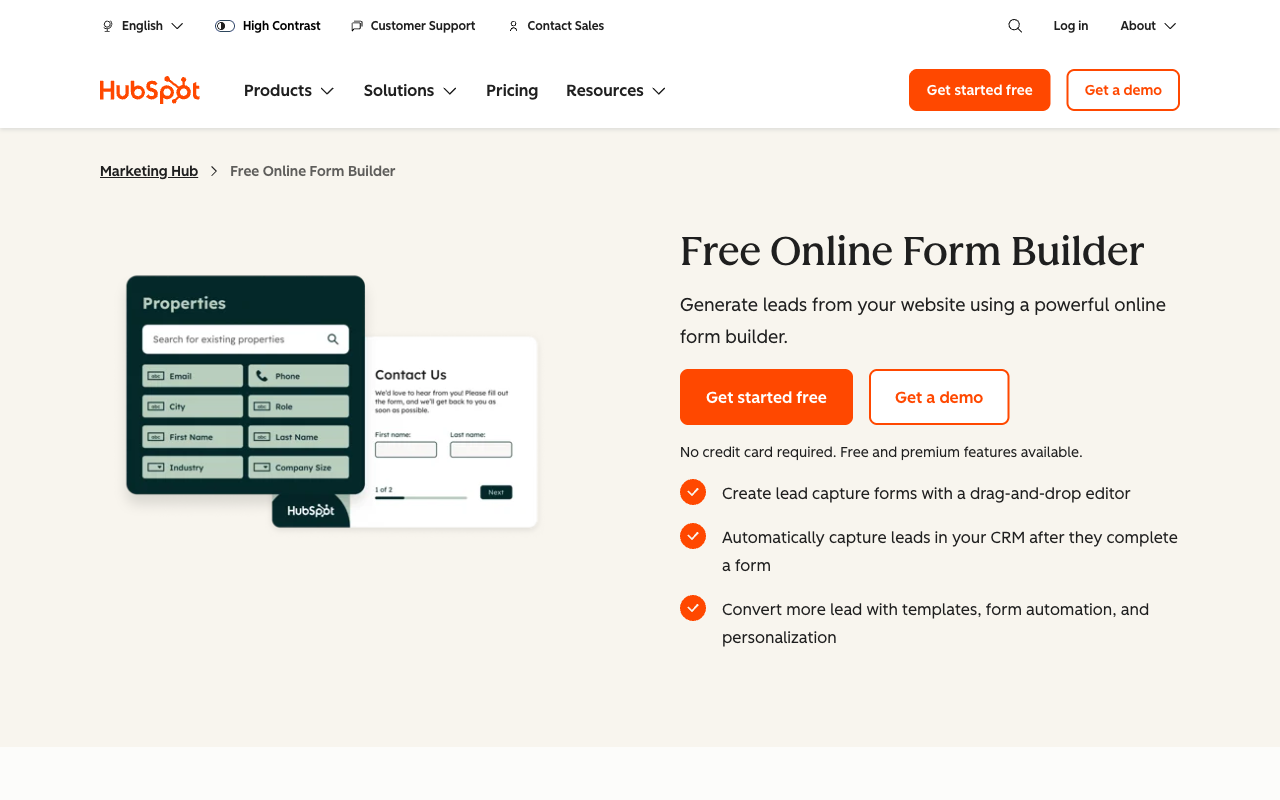
The best HubSpot Forms alternative for most teams is Paperform, because HubSpot prices seats, marketing contacts and AI credits separately while Paperform meters none of them: Pro is $49/month billed annually with unlimited submissions and unlimited users. HubSpot Forms remains the right choice for pure lead capture inside a CRM you already run.
HubSpot Forms starts free, and that free plan is a real offer: unlimited forms, unlimited submissions, two users, and every response landing in the CRM as a contact record with no integration to configure. For a marketing team that already lives in HubSpot, nothing on this page is more convenient. The problem is not the entry price. It is the shape of the price sheet above it.
Every direction a team grows in is separately billable. Seats are priced one at a time at $20/month each on Starter, $45/month for every seat past the three included on Professional and $75/month on Enterprise. Marketing contacts sit on a ladder of their own, with 1,000 included on Starter, 2,000 on Professional and 10,000 on Enterprise. AI and agent runs now draw on metered HubSpot Credits, with 500, 3,000 and 5,000 included respectively and $9 per extra 1,000 when paid annually. And the tier at which the form builder itself becomes capable, meaning smart fields, A/B testing, dependent fields and real workflows, is Marketing Hub Professional at $890/month, which carries a required $3,000 one-time onboarding fee before anyone logs in. Three meters and a cliff.
Underneath the pricing sits a second issue that has nothing to do with money. The form builder is thin. Around 15 standard CRM field types, no calculations at any price, no scoring inside the form, no answer piping, no appointment booking, no signature field, no save and resume, and no way to generate a form from a prompt. It is a lead-capture front end for a CRM, which is exactly what it was built to be. The teams searching for an alternative are usually the ones whose forms stopped being lead capture: order forms with quantities and discount codes, applications that need to be scored, registrations that end in a signed agreement. Below we rank the alternatives on the five dimensions that decide the purchase, and say plainly where HubSpot still wins.
| Feature | HubSpot Forms | Paperform | Typeform | Jotform | Google Forms | SurveyMonkey | Cognito Forms |
|---|---|---|---|---|---|---|---|
| Form Building | |||||||
| Document-style editor | No | Yes | No | No | No | No | No |
| AI form creation | No | Yes | Yes | Yes starter | Yes paid | Yes | Yes |
| AI form shortening (Breeze Intelligence) | Yes professional | No | No | No | No | No | No |
| AI agents (Agent Hub / Agent Builder) | Yes starter | No | No | No | No | No | No |
| Question types | Yes | No | No | No | No | No | No |
| Payments | |||||||
| Stripe payments | Yes starter | Yes | Yes basic | Yes starter | No | Yes Individual Advantage | Yes |
| PayPal payments | No | Yes | No | Yes starter | No | Yes Individual Advantage | Yes team |
| Square payments | No | Yes | No | Yes starter | No | No | Yes team |
| Braintree payments | No | Yes | No | Yes starter | No | No | No |
| Google Pay | No | Yes | No | Yes starter | No | No | Yes |
| Design & Customization | |||||||
| Template gallery | Yes | 30,000+ | 1,500+ | 20,000+ (starter) | 20+ | 400+ | Yes |
| Rich media (images, GIFs, videos) | No | Yes | Yes | Yes starter | Yes | Yes | Yes |
| Unsplash and Giphy integration | No | Yes | Yes | No | No | No | No |
| Image editor | No | Yes | No | No | No | No | No |
| Adobe Creative Cloud | No | Yes | No | No | No | No | No |
| Analytics | |||||||
| AI report insights | No | Yes pro | Yes business | No | Yes Business Standard | Yes Individual Advantage | No |
| Drop-off analysis | No | Yes pro | Yes business | No | No | No | No |
| Conversion analytics | Yes professional | No | No | No | No | No | No |
| Google Analytics & Facebook Pixel | Yes | Yes pro | Yes basic | No | No | No | Yes pro |
| Custom analytics scripts | No | Yes pro | Yes basic | No | No | No | No |
| Collaboration | |||||||
| Form sharing (templates) | Yes | Yes | Yes | No | Yes | Yes Team Advantage | Yes |
| Workspace organization | No | No | Yes | No | No | No | No |
| Spaces and tag management | No | Yes | No | No | No | No | No |
| Form sharing | No | No | No | Yes starter | No | No | No |
| Assign forms | No | No | No | Yes enterprise | No | No | No |
| Security | |||||||
| SOC 2 Type II | Yes | Yes | Yes | Yes enterprise | Yes | Yes | No |
| HIPAA compliant | Yes enterprise | No | Yes enterprise | Yes gold | No | No | No |
| reCAPTCHA | No | Yes | Yes business | Yes starter | No | Yes | Yes |
| Data residency | Yes enterprise | No | No | Yes enterprise | No | No | No |
| Enforce 2FA for all users | No | Yes business | No | No | Yes Business Starter | Yes enterprise | No |
| Integrations & API | |||||||
| Native integrations | Yes | 4,000+ | 120+ (basic) | 150+ (starter) | No | 200+ | No |
| Webhooks | Yes starter | Yes pro | Yes basic | Yes starter | No | Yes Individual Advantage | Yes |
| API | Yes | No | Yes basic | Yes starter | No | No | No |
| WordPress plugin | Yes | Yes | Yes | Yes starter | No | No | Yes |
| Embed options | Yes | No | Yes | Yes starter | No | No | No |
Five dimensions, and where HubSpot lands on each
HubSpot wins compliance breadth and loses form capability outright. Here is the position on each dimension, with the numbers.
Pricing
HubSpot Forms is free with HubSpot branding, $20/seat/month on Marketing Hub Starter to remove it, and $890/month on Professional for the tier with dependent fields, smart forms and A/B testing, plus a required $3,000 one-time onboarding fee. Enterprise is $3,600/month with $7,000 onboarding. Starter currently runs a limited-time new-customer promotion at $7/seat/month. Against that, Paperform Pro is $59/month, or $49/month billed annually, with unlimited submissions and unlimited seats and no onboarding fee. Jotform Bronze is $34/month billed annually, Typeform Basic $28, Cognito Forms Pro $19, and SurveyMonkey Advantage $32 on annual commitment only. HubSpot is the cheapest start and by a wide margin the most expensive finish.
Integrations & API
HubSpot lists 1,600+ marketplace integrations and a documented REST API covering forms, contacts and workflows, though Zapier, Make and webhooks require Starter. Those are platform-wide connections rather than form-level ones, and the genuine advantage is the one that needs no integration at all: the form writes directly to the CRM record. Paperform counts 4,000+ integrations across native connectors, Stepper, Zapier, Make, webhooks and a REST API, including a native HubSpot connector. SurveyMonkey lists 200+, Jotform 150+ natives, Typeform 120+, Cognito Forms 50+, and Google Forms roughly 20 inside Workspace.
Conditional logic
HubSpot gates conditional logic behind Marketing Hub Professional at $890/month, where it appears as dependent fields and progressive fields, and it offers no calculations field, no formula engine and no in-form scoring at any tier. That second half is the more consequential gap. Paperform's calculations are Excel-style and drive far more than a total: the same formulas control which questions and pages show, which conditional emails send, what gets pushed into an integration and what appears on the success page, with an AI assistant available to write the rules. Cognito Forms has logic and a strong calculation engine from its free tier, Jotform from Starter, Typeform's advanced logic from Plus at $56/month billed annually.
Payments
HubSpot supports exactly one payment processor on forms, Stripe, from the Starter tier, with no products, subscriptions, coupons, tax rules, invoicing or refunds attached to the form. Jotform supports 40+ processors on every plan including free. Paperform supports five (Stripe, PayPal, Square, Braintree, Google Pay) with a full checkout behind them and no transaction fee of its own. Cognito Forms adds PayPal and Square from Team. Typeform and SurveyMonkey are Stripe-only, and Google Forms takes no payments at all. The count matters less than what sits around it: HubSpot cannot calculate the amount it is collecting.
Compliance (HIPAA / GDPR / SOC 2)
HubSpot is GDPR, CCPA, SOC 1 Type II, SOC 2 Type II and SOC 3 compliant, with HIPAA available only on Marketing Hub Enterprise at $3,600/month via a signed BAA and enabled sensitive-data settings, and SSO and data residency also Enterprise-only. Free, Starter and Professional customers have no HIPAA coverage. Jotform, Typeform, Google Forms, SurveyMonkey and Cognito Forms are all HIPAA, GDPR and SOC 2 compliant at far lower price points. Paperform is SOC 2 Type II, GDPR and CCPA compliant with SAML SSO and enforced 2FA, and is not HIPAA compliant and signs no BAAs, so protected health information rules it out.
 #1 Paperform — Best When the Form Has to Do Work Before the CRM Sees It
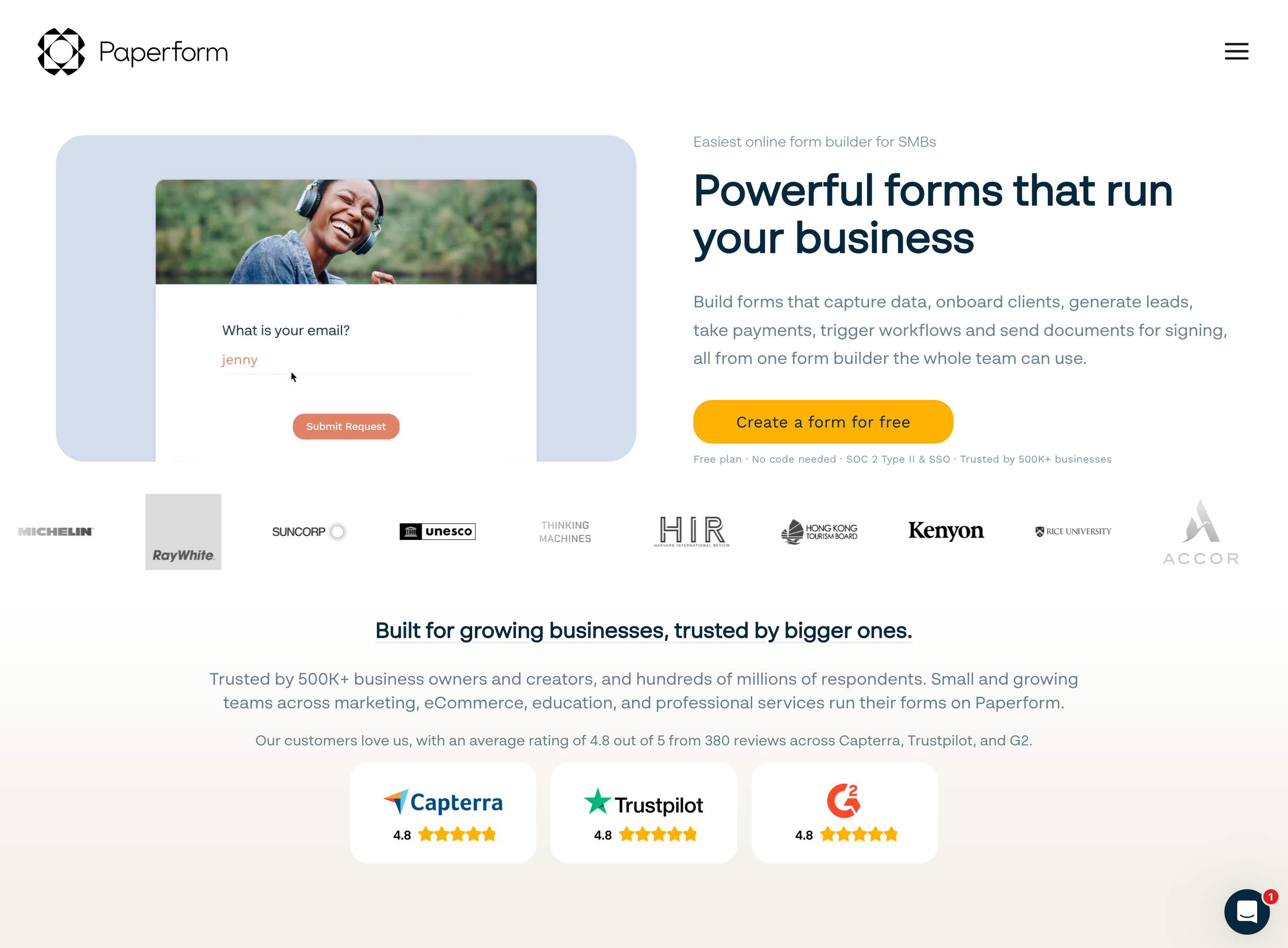
The clearest way to describe the difference is to price a growing team twice. Ten people on Marketing Hub Professional is $890/month for the three included Core Seats, plus $315/month for the other seven at $45 each, plus $3,000 of mandatory onboarding in year one, before anyone touches marketing contacts or credits. The same ten people on Paperform Pro is $49/month billed annually. Seats are unlimited on every paid Paperform plan, submissions are unlimited within fair use, and there is no contact ladder because Paperform is not storing your marketing database. It sends the data to whatever already holds it, HubSpot included.
The second argument is the one that makes the first one worth paying for. HubSpot has no calculation engine, so the moment a form needs to work something out, that logic has to leave the form. Paperform's calculations are Excel-style, and they are not confined to producing a total on the page. A formula can decide which question appears next, which page the respondent lands on, which conditional email sends and to whom, what values get written into an integration payload, and what the success page tells the person afterwards. That is the difference between an order form that quotes a price with quantity breaks, a regional tax rule and a discount code applied live, and a form that collects six fields and hands the arithmetic to someone in operations. An AI assistant will draft the formulas if you would rather describe the rule than write it.
Past the form, one subscription also covers Papersign for eSignatures and Stepper for workflow automation, so the registration that ends in a signed agreement stays in one account. HubSpot has no eSignature product at all, and its workflows start at Professional. Paperform is honest about its own meter: Stepper automation runs on credits, 20,000/month on Pro and 100,000 on Business, with overflow sold in $10 blocks on Pro. And on compliance it is the weaker vendor here, with no HIPAA and no BAAs.
- Strengths over HubSpot Forms: unlimited seats and unlimited submissions with no contact tiers, Excel-style calculations driving visibility, emails, integrations and success pages, five payment gateways with a full checkout, Papersign and Stepper in the same subscription, document-style editor with rich media and custom CSS, AI form generation and AI Insights on responses, drop-off tracking and partial submissions, 30,000+ templates, no onboarding fee
- Limitations: $49/month billed annually against HubSpot's free tier, no HIPAA compliance and no BAAs, Stepper automation credits are metered, no mobile editor, no native CRM of its own, a much smaller review base than HubSpot's 15,915 on G2
- Best for: Teams whose forms calculate, collect payment or trigger a signature, and who are tired of adding a line to the invoice every time someone joins
 #2 Jotform — Best If Payments or a HIPAA BAA Is the Blocker
Jotform solves HubSpot's two hardest limits at a fraction of the price. Payments go from Stripe alone to more than forty processors, available on every plan including the free one, and HIPAA compliance with a signed BAA arrives on Gold at $99/month billed annually rather than at Enterprise's $3,600/month. It also carries SOC 2, ISO 27001, PCI DSS Level 1, FERPA and StateRAMP, and it has been bootstrapped since 2006, so it is the same vintage as HubSpot without the quarterly earnings call.
The catch will look familiar to anyone leaving HubSpot over the price sheet, because it is the same disease in a different organ. Jotform meters submissions, forms, form views, submission storage, fields per form and signed documents, and every self-serve tier from Starter to Gold is single-user. Bronze at $34/month billed annually stops at 1,000 submissions a month, and multi-user means an Enterprise conversation. Coming from HubSpot Free's unlimited submissions, a monthly response cap is a genuine step backwards. Twenty years of accumulated features also show in the editor, which reviewers regularly call cluttered. Our Jotform alternatives page breaks the quota structure down properly.
- Strengths over HubSpot Forms: 40+ payment processors on every plan, HIPAA with a BAA at $99/month rather than $3,600, native mobile apps and a mobile editor, 150+ native integrations, approval workflows and PDF generation, far richer field set
- Limitations: submissions, forms, views and storage all metered, single-user on every self-serve tier, dated and cluttered editor, no native CRM write-back to match HubSpot's
- Best for: Teams that hit HubSpot's Stripe-only wall or a healthcare requirement they cannot fund at Enterprise prices
 #3 Typeform — Best for Lead Capture That Has to Look Expensive
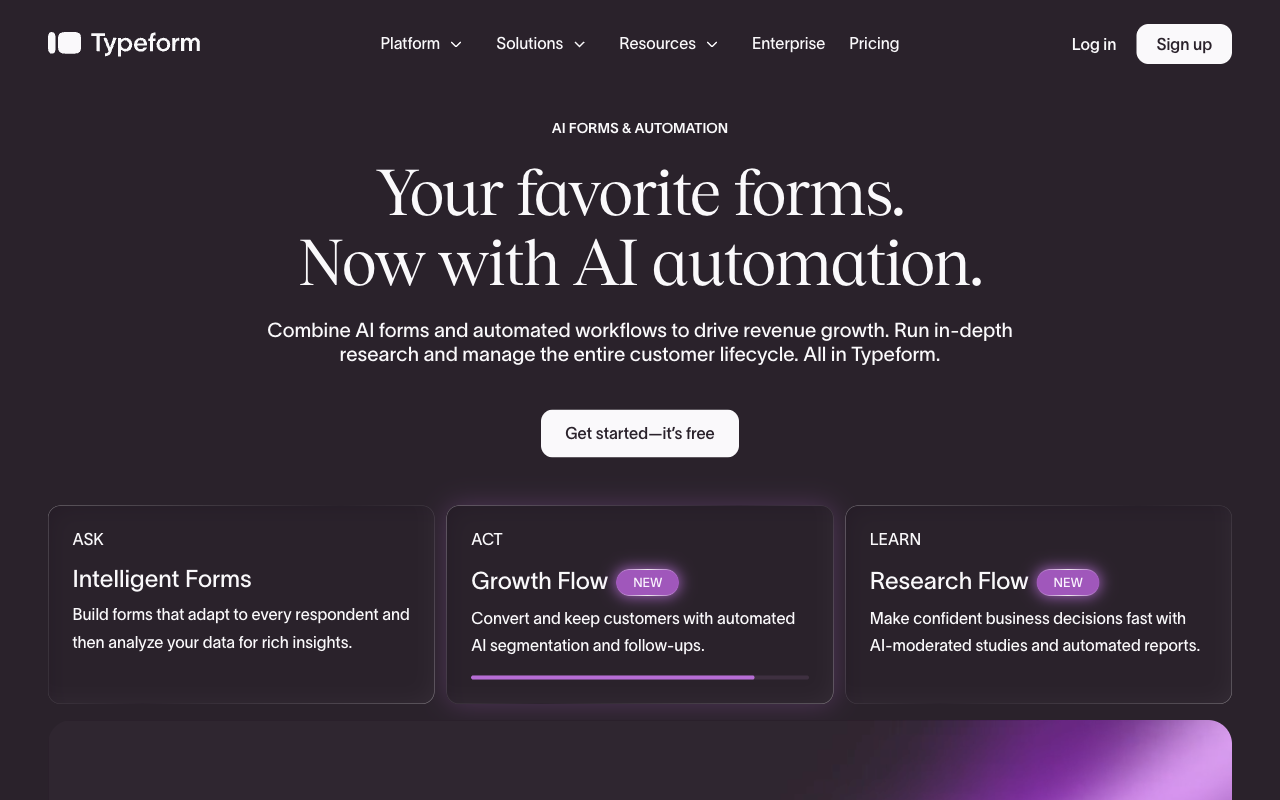
If the complaint about HubSpot Forms is that it looks like a CRM field list, Typeform is the direct fix. It invented the one-question-at-a-time format, it has the strongest defaults in the category for short qualification and feedback flows, and its native HubSpot connector means the contact still lands in the CRM exactly as before. It is HIPAA compliant on Business, holds ISO 27001, 27017, 27018 and ISO/IEC 42001, and carries roughly ten times Paperform's review volume.
Then the meter reappears, and this time it counts responses. Basic is $28/month billed annually for 100 responses and one user. Plus is $56/month for 1,000 responses and three users. Business is $91/month for 10,000 and five users, and Growth Flow at $266/month raises neither of those numbers. A marketing team moving from HubSpot Free's unlimited submissions to 100 responses a month for $28 has swapped one kind of tax for a sharper one. Advanced logic sits on Plus, payments are Stripe-only just as in HubSpot, and there is no eSignature. See our Paperform vs Typeform breakdown for the detail.
- Strengths over HubSpot Forms: conversational one-question format, best-in-class presentation out of the box, native HubSpot integration, HIPAA on Business rather than Enterprise, ISO 27001 and ISO/IEC 42001, very large review base
- Limitations: responses and seats capped on every plan, 100 responses a month on the $28 tier, advanced logic gated to Plus, Stripe-only payments, no calculations reaching beyond the form, no eSignature
- Best for: Marketing teams running low-volume, high-value qualification flows where the first impression carries the conversion rate
 #4 Cognito Forms — Best Cheap Route to Real Calculations
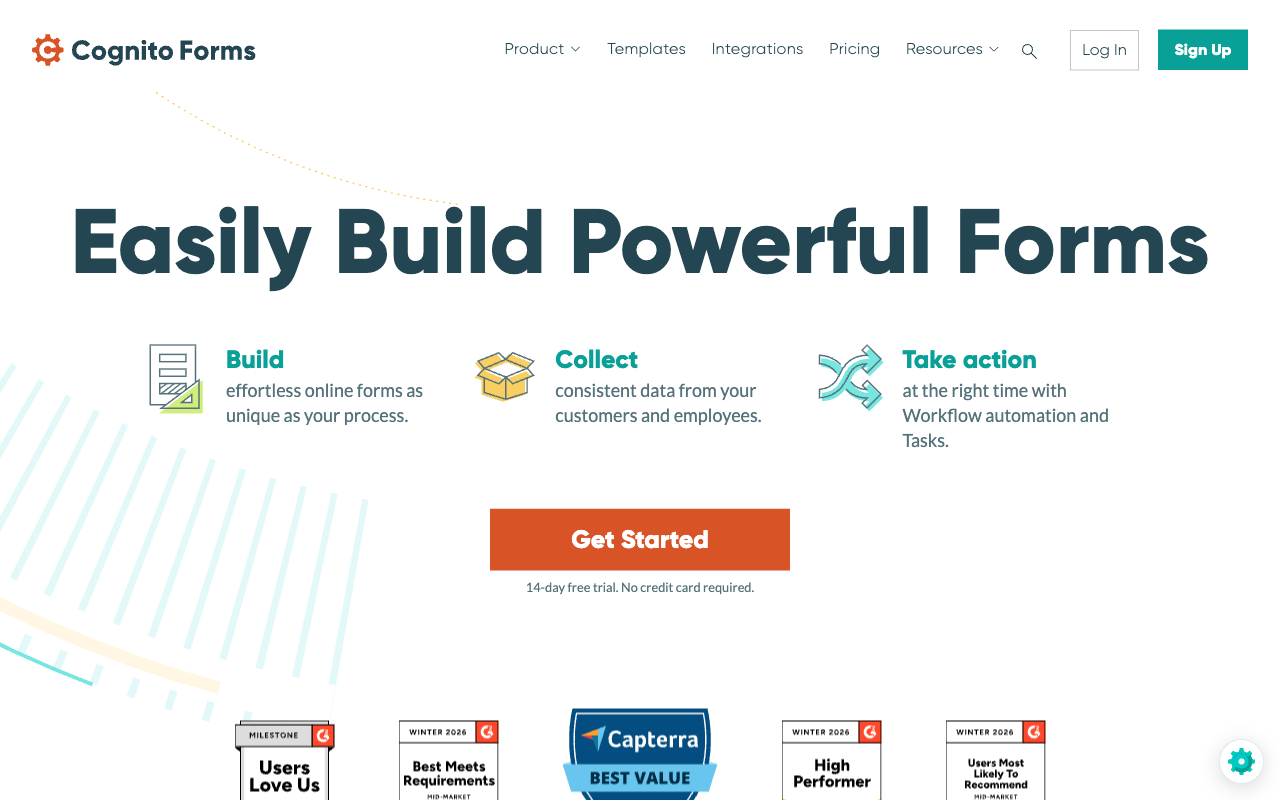
Cognito Forms answers the single biggest capability gap on this page for $19/month billed annually. Its calculation engine handles repeating sections, line-item order forms and nested conditional logic, all of which HubSpot cannot do at any tier, and logic is available even on the free plan. It is HIPAA compliant with a BAA and SOC 2 audited, and Cognito Pay adds native card processing with Apple Pay and Google Pay alongside direct Stripe, with PayPal and Square from the Team tier at $39/month.
The cost is appearance and, again, meters. Forms built in Cognito look utilitarian unless someone writes CSS, which is not an upgrade on HubSpot's generic styling so much as a sideways move. It is metered four separate ways, on entries, users, storage and guest collaborators, each with its own overage: Pro stops at 2,000 entries and two users, extra people are $5/month each, and guest packs run from $25 to $250/month. There is also no public REST API, which is a real constraint if the plan was to keep writing back to a CRM on your own terms. Our Cognito Forms alternatives page covers the quota arithmetic.
- Strengths over HubSpot Forms: genuine calculation engine with repeating sections and line items, conditional logic on the free plan, HIPAA with a BAA at $19/month rather than $3,600, more payment options including Apple Pay and Google Pay
- Limitations: dated and plain form design, no public REST API, metered on entries, users, storage and guests, no CRM of its own and no equivalent to HubSpot's native write-back
- Best for: Budget-conscious teams whose HubSpot forms were really pricing calculators in disguise, especially in regulated work
 #5 SurveyMonkey — Best When the Analysis Is the Deliverable
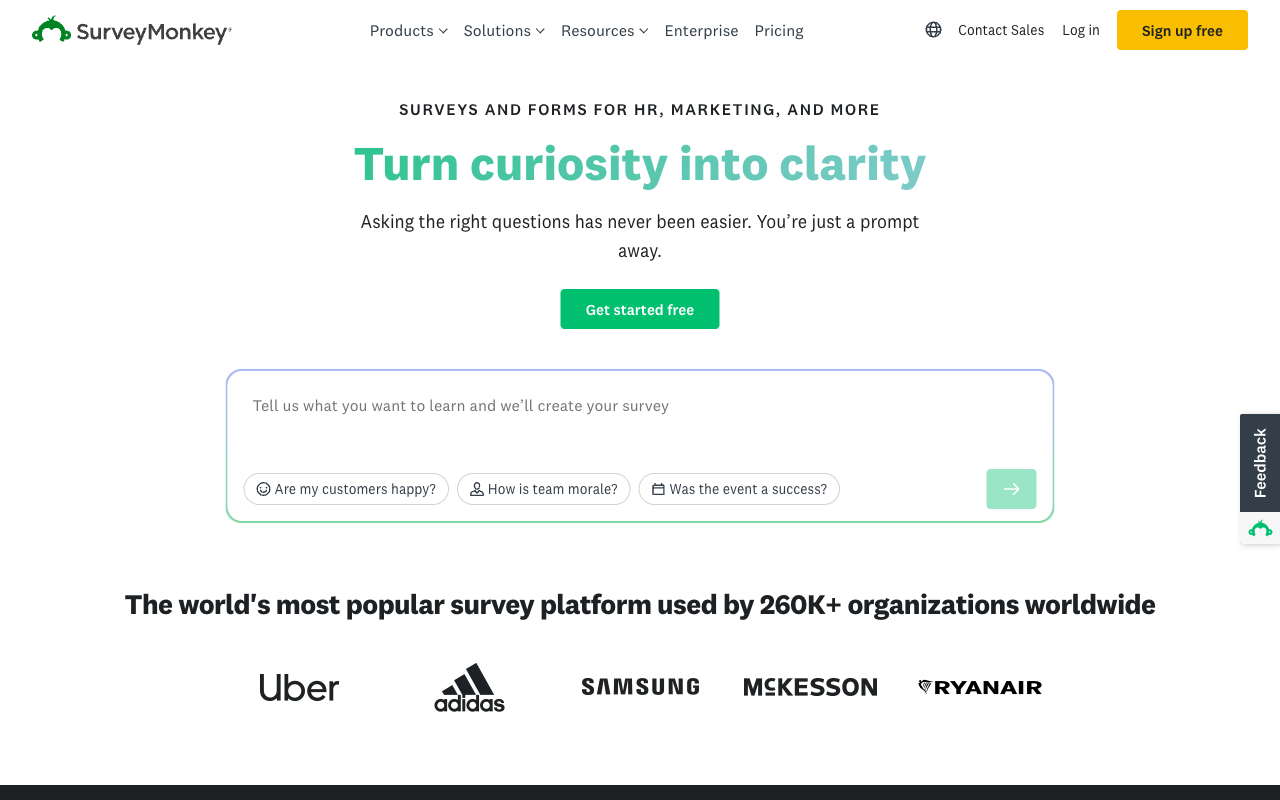
HubSpot's form analytics stop at views and conversions, with no drop-off tracking and no field-level detail. SurveyMonkey starts where that ends. Founded in 1999, it brings question banks, benchmarking, crosstabs, thematic analysis of open-text answers, multi-survey comparison and a 335-million-person respondent panel, none of which HubSpot attempts. It is HIPAA, GDPR, SOC 2 and ISO 27001 compliant, it holds PCI DSS 4.0 and Section 508, and it integrates natively with HubSpot so the results still reach the CRM.
It is also the purest expression of the pricing problem that drove you here. Responses are capped annually on every plan, at 15,000 on Individual Advantage and 40,000 on Premier, with each extra response charged at $0.15. Teams start at three paid users and Enterprise at five. Since September 2026 every paid plan is annual commitment only, which means Team Advantage's minimum is $1,080 a year and Team Premier's is $3,312. It is a research instrument rather than a form builder: no eSignature, no workflow automation, Stripe-only payments, and a form-building experience that will feel constrained if you wanted an order form.
- Strengths over HubSpot Forms: serious analysis with crosstabs, thematic analysis and benchmarking, methodology and question banks, a 335M respondent panel, HIPAA on Enterprise, 200+ integrations including native HubSpot
- Limitations: annual response caps with $0.15 overage per response, three-user minimum on Team plans, annual commitment only, survey-shaped rather than form-shaped, no calculations for pricing or quoting
- Best for: Insights and research teams who need defensible survey data rather than a better lead-capture form
 #6 Google Forms — Best for Internal Collection You Should Not Be Paying For
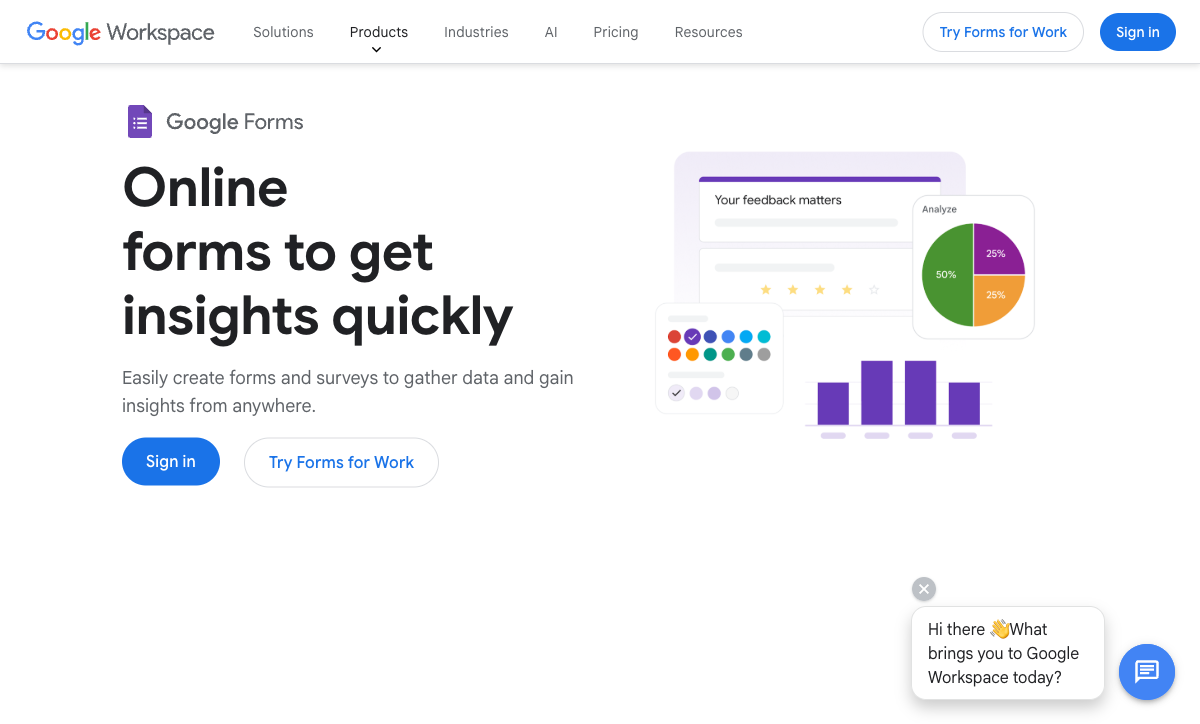
Plenty of HubSpot forms are not lead capture at all. They are internal requests, event sign-ups and team surveys that ended up in HubSpot because that is where the marketing team builds forms. Google Forms does that job for free with unlimited responses, it is HIPAA-eligible under a Workspace BAA, and it inherits SOC 2, ISO 27001 and FedRAMP through Google Cloud. Workspace itself starts at $7 per user per month on Business Starter, and most organisations are already paying it.
Outside that job it is a clear downgrade from HubSpot, which is worth stating plainly. No payments of any kind, roughly 20 integrations confined to the Google ecosystem, no meaningful calculations, no custom domains, no branding control, and no CRM write-back without a script or a Zap. For simple internal work, use the simple tool. For everything past it, keep reading our Google Forms alternatives comparison.
- Strengths over HubSpot Forms: free and unlimited with no branding upsell, HIPAA-eligible under a Workspace BAA, SOC 2 and ISO 27001 through Google Cloud, SSO and admin controls via Workspace, zero learning curve
- Limitations: no payments, no calculations worth the name, no design control, about 20 integrations, no native CRM connection, visibly generic respondent experience
- Best for: Internal surveys and sign-ups inside a Workspace organisation, where none of the data needs to reach the CRM
See Them in Action
Two independent videos worth watching before you commit: a full walkthrough of Paperform's builder, and a review of Typeform that covers its pricing and where people go instead.
Full Feature Comparison
Every feature across HubSpot Forms and its alternatives, grouped by category. The Form Building and Payments blocks are where a CRM feature stops resembling a form product.
| Feature | HubSpot Forms | Paperform | Typeform | Jotform | Google Forms | SurveyMonkey | Cognito Forms |
|---|---|---|---|---|---|---|---|
| Form Building | |||||||
| Document-style editor | No | Yes | No | No | No | No | No |
| AI form creation | No | Yes | Yes | Yes starter | Yes paid | Yes | Yes |
| AI form shortening (Breeze Intelligence) | Yes professional | No | No | No | No | No | No |
| AI agents (Agent Hub / Agent Builder) | Yes starter | No | No | No | No | No | No |
| Question types | Yes | No | No | No | No | No | No |
| Multi-page forms | Yes starter | Yes | Yes basic | Yes starter | Yes | Yes | Yes |
| Guided mode (one question at a time) | No | Yes | Yes | Yes starter | No | Yes | No |
| Conditional logic | Yes professional | Yes | Yes basic | Yes starter | Yes | Yes Individual Advantage | Yes |
| Calculations field | No | Yes pro | Yes plus | Yes starter | No | No | Yes |
| AI calculations assistant | No | Yes pro | No | No | No | No | No |
| Scoring | No | Yes pro | Yes plus | Yes starter | Yes | Yes | Yes |
| Answer piping | No | Yes | Yes basic | Yes starter | No | Yes Individual Advantage | Yes |
| Pre-filling and hidden fields | Yes | Yes pro | Yes basic | Yes starter | Yes | Yes Individual Advantage | Yes |
| Save and resume | No | Yes | No | Yes starter | No | Yes Individual Advantage | Yes pro |
| Appointment/booking field | No | Yes | Yes basic | Yes starter | No | No | No |
| Signature field | No | Yes | Yes basic | Yes starter | No | No | Yes team |
| Color picker field | No | Yes | No | No | No | No | No |
| API-powered dropdowns | No | Yes business | No | No | No | No | Yes |
| Google address search | No | Yes business | No | No | No | No | Yes |
| File uploads | Yes | Yes | Yes basic | Yes starter | Yes | Yes | Yes |
| Form unpublishing | Yes | No | No | No | No | No | No |
| Automatic lead enrichment | Yes professional | No | No | No | No | No | No |
| Automatic deal creation from forms | Yes professional | No | No | No | No | No | No |
| Field types | No | 26+ | 20+ | 30+ (starter) | 11 | 15+ | 20+ |
| Auto-close by number | No | Yes pro | Yes basic | Yes starter | Yes | Yes Individual Advantage | Yes |
| Auto-close by date | No | Yes pro | Yes basic | Yes starter | Yes | Yes Individual Advantage | Yes |
| Question display logic | No | No | Yes basic | No | No | No | No |
| AI follow-up questions | No | No | Yes business | No | No | No | No |
| AI extended thinking & memory | No | No | Yes growth | No | No | No | No |
| Typeform AI connectors | No | No | Yes growth | No | No | No | No |
| Workflow / automation builder | No | No | Yes growth | No | No | No | No |
| AI-moderated research (Research Flow) | No | No | Yes enterprise | No | No | No | No |
| Video questions | No | No | Yes basic | No | No | No | No |
| Drag-and-drop builder | No | No | No | Yes starter | No | No | No |
| Form widgets | No | No | No | Yes starter | No | No | No |
| Template gallery | No | No | No | 20,000+ (starter) | No | No | No |
| AI quiz generation | No | No | No | No | Yes paid | No | No |
| AI chat survey editing | No | No | No | No | No | Yes | No |
| Payments | |||||||
| Stripe payments | Yes starter | Yes | Yes basic | Yes starter | No | Yes Individual Advantage | Yes |
| PayPal payments | No | Yes | No | Yes starter | No | Yes Individual Advantage | Yes team |
| Square payments | No | Yes | No | Yes starter | No | No | Yes team |
| Braintree payments | No | Yes | No | Yes starter | No | No | No |
| Google Pay | No | Yes | No | Yes starter | No | No | Yes |
| Product sales (eCommerce) | No | Yes pro | No | Yes starter | No | No | Yes |
| Subscriptions | No | Yes pro | Yes basic | Yes starter | No | No | No |
| Coupons and discounts | No | Yes pro | No | Yes starter | No | No | Yes |
| Custom pricing rules | No | Yes pro | No | Yes starter | No | No | Yes |
| Tax calculations | No | Yes | No | Yes starter | No | No | Yes |
| Quotes/invoices | No | Yes | No | No | No | No | Yes team |
| Refunds | No | Yes | No | No | No | No | No |
| 3D Secure | No | Yes | Yes basic | No | No | No | No |
| 40+ payment gateways | No | No | No | Yes starter | No | No | No |
| No transaction fees | No | No | No | Yes starter | No | No | No |
| Cognito Pay (native card processing) | No | No | No | No | No | No | Yes |
| Design & Customization | |||||||
| Template gallery | Yes | 30,000+ | 1,500+ | 20,000+ (starter) | 20+ | 400+ | Yes |
| Rich media (images, GIFs, videos) | No | Yes | Yes | Yes starter | Yes | Yes | Yes |
| Unsplash and Giphy integration | No | Yes | Yes | No | No | No | No |
| Image editor | No | Yes | No | No | No | No | No |
| Adobe Creative Cloud | No | Yes | No | No | No | No | No |
| Language translation | No | Yes | Yes basic | Yes starter | No | Yes Individual Premier | Yes pro |
| Advanced theming | Yes starter | Yes pro | Yes plus | Yes starter | No | Yes Individual Advantage | Yes pro |
| Custom form URL | No | Yes pro | Yes plus | No | No | Yes Individual Advantage | No |
| Custom domains | No | Yes pro | Yes enterprise | Yes enterprise | No | No | No |
| Custom HTML & CSS | Yes starter | Yes pro | Yes business | Yes starter | No | No | Yes pro |
| Remove branding | Yes starter | Yes pro | Yes plus | Yes bronze | No | Yes Individual Advantage | Yes pro |
| Custom email domains | No | Yes business | No | No | Yes Business Starter | No | No |
| Form themes | No | No | No | Yes starter | No | No | No |
| Analytics | |||||||
| Submission results and reports | Yes | Yes | Yes | Yes starter | Yes | Yes | Yes |
| AI report insights | No | Yes pro | Yes business | No | Yes Business Standard | Yes Individual Advantage | No |
| Drop-off analysis | No | Yes pro | Yes business | No | No | No | No |
| Conversion analytics | Yes professional | No | No | No | No | No | No |
| Google Analytics & Facebook Pixel | Yes | Yes pro | Yes basic | No | No | No | Yes pro |
| Custom analytics scripts | No | Yes pro | Yes basic | No | No | No | No |
| Partial submissions | No | Yes pro | Yes plus | No | No | Yes Individual Advantage | No |
| Paperform analytics | No | Yes pro | No | No | No | No | No |
| Cross-form Insights dashboard | No | No | Yes business | No | No | No | No |
| Form analytics | No | No | No | Yes starter | No | No | No |
| Google Analytics integration | No | No | No | Yes starter | No | No | No |
| Benchmarks | No | No | No | No | No | No | No |
| Collaboration | |||||||
| Multi-user accounts | Yes | Yes pro | Yes plus | Yes bronze | Yes | Yes Team Advantage | Yes pro |
| User permissions and management | Yes starter | Yes pro | Yes plus | Yes enterprise | Yes | Yes Team Advantage | Yes team |
| Advanced permissions & admin | Yes enterprise | Yes enterprise | Yes enterprise | Yes enterprise | Yes Business Starter | Yes enterprise | Yes enterprise |
| Form sharing (templates) | Yes | Yes | Yes | No | Yes | Yes Team Advantage | Yes |
| Workspace organization | No | No | Yes | No | No | No | No |
| Spaces and tag management | No | Yes | No | No | No | No | No |
| Form sharing | No | No | No | Yes starter | No | No | No |
| Assign forms | No | No | No | Yes enterprise | No | No | No |
| Review Sessions | No | No | No | No | No | Yes Team Advantage | No |
| Persistent Magic Link | No | No | No | No | No | Yes Team Advantage | No |
| Security | |||||||
| SOC 2 Type II | Yes | Yes | Yes | Yes enterprise | Yes | Yes | No |
| GDPR compliant | Yes | Yes | Yes | Yes starter | Yes | Yes | Yes |
| HIPAA compliant | Yes enterprise | No | Yes enterprise | Yes gold | No | No | No |
| SSL encryption | Yes | Yes | Yes | Yes starter | Yes | Yes | Yes |
| Two-factor authentication | Yes | Yes | Yes | Yes starter | Yes | Yes | Yes |
| SSO (SAML) | Yes enterprise | Yes business | Yes enterprise | Yes enterprise | Yes Business Plus | Yes enterprise | Yes enterprise |
| reCAPTCHA | No | Yes | Yes business | Yes starter | No | Yes | Yes |
| Data residency | Yes enterprise | No | No | Yes enterprise | No | No | No |
| Custom S3 storage | No | No | No | No | No | No | No |
| Enforce 2FA for all users | No | Yes business | No | No | Yes Business Starter | Yes enterprise | No |
| Local data residency | No | Yes enterprise | No | No | Yes Business Plus | Yes enterprise | No |
| Custom S3 storage (BYO) | No | Yes business | No | No | No | No | No |
| ISO 27001 | No | No | Yes | No | No | No | No |
| PCI DSS | No | No | Yes | Yes starter | No | No | No |
| 256-bit SSL | No | No | No | Yes starter | No | No | No |
| Form encryption | No | No | No | Yes starter | No | No | No |
| Integrations & API | |||||||
| Native integrations | Yes | 4,000+ | 120+ (basic) | 150+ (starter) | No | 200+ | No |
| Zapier | Yes starter | Yes | Yes basic | Yes starter | Yes | Yes | Yes |
| Make (Integromat) | Yes starter | Yes | Yes basic | Yes starter | Yes | Yes | Yes |
| Webhooks | Yes starter | Yes pro | Yes basic | Yes starter | No | Yes Individual Advantage | Yes |
| API | Yes | No | Yes basic | Yes starter | No | No | No |
| WordPress plugin | Yes | Yes | Yes | Yes starter | No | No | Yes |
| Embed options | Yes | No | Yes | Yes starter | No | No | No |
| Standard API | No | Yes pro | No | No | Yes | Yes Individual Advantage | Yes |
| Business API | No | Yes business | No | No | No | Yes enterprise | No |
| oEmbed support | No | Yes | No | No | No | No | Yes |
| Claude / MCP server | No | No | Yes basic | No | No | No | No |
| AI data enrichment | No | No | Yes growth | No | No | No | No |
| Automations integrations (Contacts & Automations) | No | No | Yes growth | No | No | No | No |
| Smartsheet integration | No | No | No | Yes starter | No | No | No |
| Canvas LMS integration | No | No | No | Yes enterprise | No | No | No |
| Salesforce AppExchange | No | No | No | Yes starter | No | No | No |
| Mobile apps | No | No | No | Yes starter | No | No | No |
| Claude (Anthropic) integration | No | No | No | No | No | Yes Individual Advantage | No |
| ChatGPT integration | No | No | No | No | No | Yes | No |
| Gemini integration | No | No | No | No | No | No | No |
| HRIS integrations (Workday, BambooHR) | No | No | No | No | No | Yes | No |
| MCP connector (AI app access) | No | No | No | No | No | No | Yes pro |
Pricing Comparison
HubSpot Forms is free and then discontinuous: $20/seat/month to remove branding, $890/month for the capable tier with $3,000 of onboarding attached, $3,600/month for compliance features. Read the table for what each step buys rather than for the entry price.

Paperform
HubSpot Forms
| Product | Plan | Monthly Price | Annual Price (per month) | Free Plan | Free Trial | Limits |
|---|---|---|---|---|---|---|
| HubSpot Forms | Free | Free | Free | Yes | 14 days | forms: Unlimited, submissions: Unlimited, users: 2 |
| HubSpot Forms | Marketing Hub Starter | $20/mo | $20/mo billed annually | forms: Unlimited, submissions: Unlimited, users: Per seat | ||
| HubSpot Forms | Marketing Hub Professional | $890/mo | $800/mo billed annually | forms: Unlimited, submissions: Unlimited, users: 3 Core Seats included (additional Core Seats from $45/mo) | ||
| HubSpot Forms | Marketing Hub Enterprise | $3600/mo | $3600/mo billed annually | forms: Unlimited, submissions: Unlimited, users: 5 Core Seats included (additional Core Seats from $75/mo) | ||
| Paperform | Free | Free | Free | Yes | 7 days | forms: Unlimited, submissions: 30/month, storage: Unlimited, users: Unlimited, file uploads: 100 MB |
| Paperform | Pro | $59/mo | $49/mo billed annually | forms: Unlimited, submissions: Unlimited, storage: Unlimited, users: Unlimited, file uploads: 10 GB | ||
| Paperform | Business | $149/mo | $124/mo billed annually | forms: Unlimited, submissions: Unlimited, storage: Unlimited, users: Unlimited, file uploads: 100 GB | ||
| Typeform | Free | Free | Free | Yes | No | forms: 10, submissions: 10/month, users: 1 |
| Typeform | Basic | $39/mo | $28/mo billed annually | forms: Unlimited, submissions: 100/month, users: 1 | ||
| Typeform | Plus | $79/mo | $56/mo billed annually | forms: Unlimited, submissions: 1,000/month, users: 3 | ||
| Typeform | Business | $129/mo | $91/mo billed annually | forms: Unlimited, submissions: 10,000/month, users: 5 | ||
| Typeform | Growth Flow | $379/mo | $266/mo billed annually | forms: Unlimited, submissions: 10,000/month, users: 5 | ||
| Typeform | Talent | $169/mo | $119/mo billed annually | forms: Unlimited, users: HR teams | ||
| Jotform | Starter | Free | Free | Yes | No | forms: 5, submissions: 100/month, storage: 100 MB, users: 1 |
| Jotform | Bronze | $39/mo | $34/mo billed annually | forms: 25, submissions: 1,000/month, storage: 1 GB, users: 1 | ||
| Jotform | Silver | $49/mo | $39/mo billed annually | forms: 50, submissions: 2,500/month, storage: 10 GB, users: 1 | ||
| Jotform | Gold | $129/mo | $99/mo billed annually | forms: 100, submissions: 10,000/month, storage: 100 GB, users: 1 | ||
| Google Forms | Free (Personal) | Free | Free | Yes | 14 days | forms: Unlimited, submissions: Unlimited, storage: 15 GB (shared across Google Drive), users: 1, file uploads: Included in 15 GB storage |
| Google Forms | Business Starter | $8.4/mo | $7/mo billed annually | forms: Unlimited, submissions: Unlimited, storage: 30 GB per user, users: Up to 300, file uploads: Included in storage | ||
| Google Forms | Business Standard | $16.8/mo | $14/mo billed annually | forms: Unlimited, submissions: Unlimited, storage: 2 TB per user, users: Up to 300, file uploads: Included in storage | ||
| Google Forms | Business Plus | $26.4/mo | $22/mo billed annually | forms: Unlimited, submissions: Unlimited, storage: 5 TB per user, users: Up to 300, file uploads: Included in storage | ||
| SurveyMonkey | Basic (Free) | Free | Free | Yes | No | forms: Unlimited, submissions: Limited per survey (exact number now only shown after sign-up/login), storage: N/A, users: 1 |
| SurveyMonkey | Individual Advantage | Free | $32/mo billed annually | forms: Unlimited, submissions: 15,000 per year, storage: N/A, users: 1 | ||
| SurveyMonkey | Individual Premier | Free | $99/mo billed annually | forms: Unlimited, submissions: 40,000 per year, storage: N/A, users: 1 | ||
| SurveyMonkey | Team Advantage | Free | $30/mo billed annually | forms: Unlimited, submissions: 50,000 per year (shared), storage: N/A, users: 3 minimum | ||
| SurveyMonkey | Team Premier | Free | $92/mo billed annually | forms: Unlimited, submissions: 100,000 per year (shared), storage: N/A, users: 3 minimum | ||
| Cognito Forms | Individual (Free) | Free | Free | Yes | 14 days | forms: Unlimited, submissions: 100 entries/month, storage: 100 MB, users: 1 |
| Cognito Forms | Pro | $24/mo | $19/mo billed annually | forms: Unlimited, submissions: 2,000 entries/month, storage: 1 GB, users: 2 | ||
| Cognito Forms | Team | $49/mo | $39/mo billed annually | forms: Unlimited, submissions: 10,000 entries/month, storage: 10 GB, users: 5 | ||
| Cognito Forms | Enterprise | $174/mo | $129/mo billed annually | forms: Unlimited, submissions: Unlimited, storage: 100 GB, users: 20 |
Review Ratings Across Platforms
HubSpot Marketing Hub rates 4.4 on G2 across 15,915 reviews and 4.5 on Capterra across 6,256, with value for money its weakest sub-score at 4.1 on both. Its company-level Trustpilot profile sits at 1.5 across 1,169 reviews, where the recurring themes are cost, inflexible annual contracts and support. Those ratings cover the whole platform rather than Forms specifically, and HubSpot's review volume dwarfs everything else here.
Verdict: Which HubSpot Forms Alternative Should You Choose?
Almost nobody leaves HubSpot Forms because the form was bad on day one. They leave because the invoice started tracking their growth, or because the form was asked to do something a CRM field list cannot do.
If both of those are true, Paperform is the recommendation. Seats and submissions are unlimited on paid plans within fair use, so a bigger team and a better campaign cost the same as a small one, and Excel-style calculations mean the form can price an order, score an application and route the follow-up before HubSpot ever sees the contact. Papersign and Stepper come in the same subscription, and the native HubSpot connector means you keep the CRM. Pro is $49/month billed annually with no onboarding fee, against $890/month plus $3,000 for the HubSpot tier that starts to compete.
If the blocker is narrower, take the tool that removes it. Jotform for payment processors or an affordable HIPAA BAA. Typeform for a lead capture experience worth putting in a paid campaign, if your volumes are low. Cognito Forms for calculations on the smallest possible budget. SurveyMonkey when the survey is research rather than marketing. Google Forms when the form was only ever feeding a spreadsheet.
And if you are two people capturing leads into a CRM you already pay for, stay on HubSpot Free. It is unlimited, it is genuinely free, and nothing here improves on it for that job. Come back when the third seat, the first calculation or the first contract arrives. Paperform's trial runs seven days with no card, and you can wire it to the same HubSpot account you are using now. For the wider field, see our best form builders roundup.
Frequently Asked Questions
What does it actually cost to get conditional logic on a HubSpot form?
Marketing Hub Professional, at $890/month for three Core Seats, plus a required $3,000 one-time onboarding fee. Dependent fields and progressive fields are the Professional-tier features that give HubSpot Forms real branching, so a team on Free or Starter cannot show and hide questions based on answers. Additional Core Seats are $45/month each on that tier. Paperform includes conditional logic, Excel-style calculations and scoring on Pro at $59/month, or $49/month billed annually, with unlimited seats. Cognito Forms has logic from its free tier and Jotform from Starter, so the $890 number is a HubSpot packaging decision rather than a market rate.
Can a HubSpot form work out a price, a quote or a score?
No. HubSpot Forms has no calculations field, no formula engine and no scoring inside the form at any tier. Lead scoring happens in the CRM after the submission lands, which is too late if the respondent needed to see a total before they pressed submit. Anything involving quantities, tiers, discount codes or region-based tax has to move into a Professional-tier workflow or a developer's hands. Paperform's calculations are Excel-style and do not stop at showing a number: the same formulas decide which questions and pages appear, which conditional emails fire, what payload goes out to an integration and what the success page says. Cognito Forms is the other strong answer here, with a calculation engine that handles repeating sections and line items from $19/month billed annually.
Do I lose the CRM write-back if I move off HubSpot Forms?
No, and this is the misconception that keeps teams on a thin form builder. HubSpot's own API and its marketplace of 1,600+ integrations exist precisely so that outside tools can create and update contacts. Paperform has a native HubSpot integration and reaches 4,000+ services in total through native connectors, Stepper workflows, Zapier, Make, webhooks and a REST API, so a submission still creates the contact, still triggers the workflow and still scores the lead. The difference is that the form itself is no longer a HubSpot feature, so it survives a CRM migration intact.
Is HubSpot Forms HIPAA compliant?
Only on Marketing Hub Enterprise, which starts at $3,600/month with a $7,000 one-time onboarding fee. HubSpot will sign a BAA with Enterprise customers that identify as covered entities and enable its sensitive data settings, and the BAA covers only specified covered services. Free, Starter and Professional do not qualify, so most teams using HubSpot Forms have no HIPAA coverage at all. If protected health information is in scope and $3,600/month is not, the cheaper routes are Jotform with a BAA on Gold at $99/month billed annually, Cognito Forms, Google Forms under a Workspace BAA, Typeform on Business or SurveyMonkey Enterprise. Paperform is not HIPAA compliant and signs no BAAs, so it is not the answer to this question.
What are HubSpot Credits and will they show up on my invoice?
HubSpot Credits are the metered currency behind HubSpot's AI and agent features, introduced on top of the existing seat and marketing-contact pricing. Starter includes 500, Professional 3,000 and Enterprise 5,000, and extra credits cost $9 per 1,000 when paid annually. The Customer Agent burns 50 credits per conversation resolved and the Data Agent 10 per smart-properties run, so the allowances move quickly once an agent is live. It is a third meter alongside seats and contacts. Paperform meters neither submissions nor seats, and is honest about its one meter: Stepper automation credits run 20,000/month on Pro and 100,000 on Business, with overflow at $10/month per 10,000 on Pro.
Can I take PayPal or Square payments through a HubSpot form?
No. HubSpot Payments runs through Stripe only, from the Starter tier, with no PayPal, Square, Braintree or Google Pay, and no products, subscriptions, coupons, tax rules or refunds attached to the form. It collects a payment rather than running a checkout. Jotform is the widest option in this group with 40+ processors available on every plan including free. Paperform supports five gateways (Stripe, PayPal, Square, Braintree, Google Pay) with products, subscriptions, coupons, tax and refunds handled inside the form and no Paperform transaction fee on top, and the pricing maths runs through the same calculation engine. Cognito Forms adds PayPal and Square from its Team tier at $39/month billed annually.
Why do my HubSpot forms all look the same?
Because HubSpot Forms is a drag-and-drop field list built from roughly 15 standard CRM field types, with no rich media inside the form, no Unsplash or Giphy, no image editor, no custom form URLs and no custom domains. Free adds HubSpot branding on top, removable from Starter at $20/seat/month list. Reviewers consistently describe the design control as thinner than a dedicated builder's. Paperform takes the document-style approach, where headings, copy, images, GIFs and video sit between fields and a form reads like a landing page, with custom HTML and CSS available. Typeform is the other strong answer if presentation is the whole problem, though it is the one-question-at-a-time format rather than a page.
Does HubSpot tell me where people abandon a form?
No. HubSpot Forms reports views, submissions and conversion rate, with conversion analytics arriving at Professional, but there is no drop-off tracking, no field-level analytics and no partial submission capture. One G2 reviewer's summary is that tracking is a gap and only very general details about views and conversions come through. Paperform includes form analytics with drop-off tracking and partial submissions on Pro, plus AI Insights, which reads open-text answers and returns a readable summary rather than a table. SurveyMonkey is the stronger option again if the analysis itself is the deliverable, with crosstabs, thematic analysis and multi-survey comparison.
I am a two-person team on the free HubSpot plan. Should I switch at all?
Probably not yet, and we will say so plainly. HubSpot Free gives you unlimited forms and unlimited submissions writing straight into a CRM you already use, with two users, and nothing on this page beats free for straightforward lead capture. The trigger to move is not the form, it is the third person who needs access, the first form that has to calculate something, or the first contract that has to be signed after the submission. At that point Paperform Pro is $49/month billed annually with unlimited seats and unlimited submissions, against Starter's per-seat charge and Professional's $890/month for the capable tier.
Who owns HubSpot, and does that matter for a form I will run for years?
HubSpot, Inc. was founded in 2006, is headquartered in Cambridge, Massachusetts and trades publicly on the NYSE with more than 10,000 staff. Longevity is genuinely a point in its favour, and nobody is worrying about the vendor disappearing. The trade is that packaging answers to the market rather than to you, and HubSpot has relayered its pricing repeatedly in the last two years with the seat model, marketing-contact tiers, HubSpot Credits and the AEO add-on. Paperform was founded in 2016, is bootstrapped and profitable, and has kept submissions and seats off the meter throughout. Jotform has been bootstrapped since 2006, Typeform is Series C funded and SurveyMonkey is owned by private equity firm Symphony Technology Group.
Sources & References
- HubSpot Forms Review (2026): Features, Pricing & Limitations — Knock AI, 2026
- Full HubSpot Review: Features, Pricing, Pros & Cons [2026] — LaGrowthMachine, 2026
- HubSpot CRM Review 2026: Everything You Need to Know — EmailToolTester, 2026
- HubSpot Marketing Hub reviews and ratings — G2, 2026
Last updated September 22, 2026
Ready to try Paperform?
Create beautiful forms, payment pages, and workflows — no code required.